
Ocean 3D clients and case studies
Helping people understand a place before they arrive
Ocean 3D works with organisations that want to make buildings, journeys and unfamiliar environments easier to understand before somebody arrives.
Our virtual tours have been commissioned for many different reasons. Some clients want to help disabled or anxious visitors familiarise themselves with a location in advance. Others want prospective students, passengers, patients, guests or customers to understand what to expect. The same digital environment can also be used for marketing, staff familiarisation, recruitment, public engagement, emergency planning, training, facilities management and digital preservation.
Increasingly, a single scan can support several of these functions. For example, one client uses a public-facing tour for visitors, a separate password-protected copy for facilities management and emergency planning, and another version for staff induction, location-specific training and safety information.
That ability to capture a location once and then create different versions for different audiences can significantly extend the usefulness of the original project.

Over the years, Ocean 3D has created virtual tours for organisations across transport, education, healthcare, tourism and hospitality, museums and heritage, theatres and cultural venues, charities, public bodies, commercial property and other sectors.
The examples below show some of the ways they have been used.
Transport and passenger familiarisation
Lumo
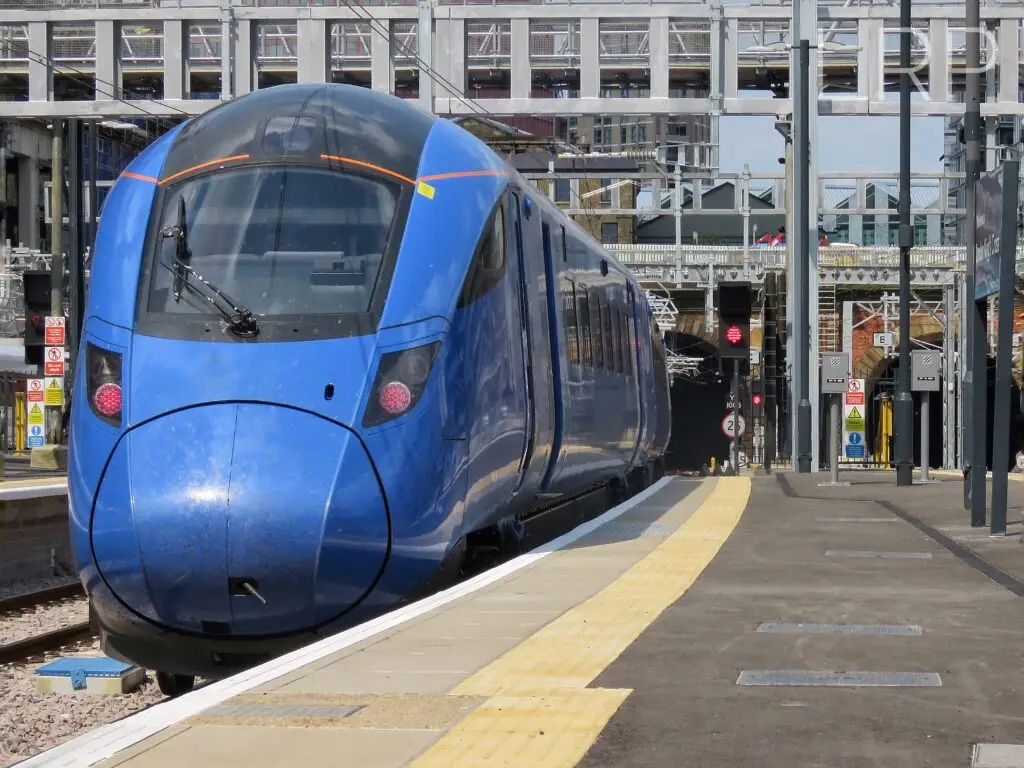
Lumo, part of FirstGroup, initially engaged Ocean 3D to enable passengers to explore its trains before travelling.
Alongside the virtual tour, Lumo also commissioned Ocean 3D to produce a passenger sensory guide. This included information such as the number of tunnels along the route and the changes in sound, lighting and air pressure passengers may experience as the train enters and leaves tunnels at speed.
Information of this kind can be particularly useful for people who find unexpected sounds, environmental changes or unfamiliar experiences difficult or anxiety-provoking.
In 2026, Lumo approached Ocean 3D again following refurbishment and rebranding of its fleet.
The new tour allows passengers to move through the train in advance and understand its layout, seating and accessibility features before travelling. With the additional AVA accessibility layer, users can also access the tour using screen readers and alternative keyboard, touch or mouse navigation, together with high-contrast options and additional descriptions of tour views.
Lumo describes Ocean 3D as its “long-term visual partners” and reported that the updated 2026 tour attracted 49% more visitors during its first month than the previous version. The earlier tour had already been used by more than 14,200 people.
For somebody who wants to know where they are going, what the train will look like or what facilities they will find when they board, the opportunity to explore beforehand can provide useful information before the journey even begins.
Brownsville South Padre Island International Airport
Ocean 3D was first commissioned in 2020 to create an interactive virtual tour of the newly constructed terminal at Brownsville South Padre Island International Airport in Texas.
Following further improvements to the airport, Ocean 3D was re-engaged in 2023 to rescan the terminal and airside environment and to capture a Boeing 737 aircraft.
The project therefore allowed prospective passengers to explore not only the airport but also the layout and facilities of a typical aircraft. That can be particularly useful to somebody who has never flown before, or who flies infrequently and wants to understand more of the journey in advance.
The airport continues to use the tour as part of its passenger information. Airport Director Angel Ramos has described the Ocean 3D tour as a way for travellers to familiarise themselves with where they are going before they arrive.
The project demonstrates how the same digital resource can support passenger familiarisation, accessibility information, destination marketing and general passenger confidence.
Education, SEND and transition
Charlton Park Academy and CENMAC
Charlton Park Academy and CENMAC worked with Ocean 3D to create a detailed virtual representation of the school environment.
Pupil-facing areas were captured so that students, families, professionals and new members of staff could explore the school before attending.
CENMAC has described the project as supporting transitions, information-sharing and greater awareness of the academy's inclusive practice.
For pupils who benefit from repetition, preparation or a clearer understanding of an unfamiliar environment, virtual familiarisation can complement transition visits and other support by allowing the school to be explored repeatedly, at the individual's own pace.
Explore the school before attending
CENMAC says the tours support students, families and professionals, helping improve transitions, share information and raise awareness of specialist provision.
Read the CENMAC project articleFurther education
Ocean 3D has also delivered extensive virtual-tour programmes for further education providers.
Projects have included campuses, classrooms, specialist learning environments, engineering facilities, accommodation and other student-facing spaces. Tours have been commissioned for SEND transition and accessibility as well as student information, recruitment and marketing.
One particularly extensive programme began when Weston College commissioned Ocean 3D to support SEND learners and was later expanded across a much wider range of college environments.
Weston's own internal correspondence recorded that the tours helped students familiarise themselves with college facilities, supported accessibility requirements and were regarded by the College as “a recognised ancillary aid/reasonable adjustment under The Equality Act 2010”.
Ofsted described Ocean 3D's initiative as “commendable and thought-provoking” and recognised the potential benefits of enabling pupils, particularly those with SEND, to familiarise themselves with their school environment.
Claire Stewart, Deputy Director, Inclusive Education, Ofsted, July 2025Independent academic research is also moving in the same direction. Recent peer-reviewed work identifies physical, academic and social familiarity with a new school as important in reducing transition-related anxiety. Separate research in special-school settings has concluded that 360-degree virtual tours can be a useful transition tool, while a controlled study involving 359 children found better teacher-rated adjustment on several measures after children had been given a pre-entry 360-degree school tour.
Analytics across several college projects have also shown marked increases in viewing around GCSE and A-level results days and in the weeks and days before the start of a new academic year.
Those figures do not tell us why every individual visited. They do show that students, families and other users continue to explore education environments digitally over substantial periods of time.
Further education familiarisation
Ocean 3D has created college and specialist-learning tours used for SEND transition, accessibility, student information, recruitment and marketing.
View the South Bristol Skills Academy project pageHealthcare and pre-visit familiarisation
Morrab Surgery and healthcare
Ocean 3D has created tours for several NHS organisations, including a young people's mental-health unit and a suite of operating theatres.
More recently, Ocean 3D created a virtual familiarisation tour of Morrab Surgery in Penzance so that patients and visitors could explore the practice and its facilities before arriving.
A healthcare visit can involve uncertainty about entrances, reception, waiting areas, consulting rooms, treatment environments and simply knowing where to go next. A virtual tour gives patients an opportunity to understand that physical environment beforehand and revisit it at their own pace.
Ocean 3D does not claim that a virtual tour will remove all anxiety or prevent missed appointments. There is, however, growing evidence and increasingly widespread NHS practice supporting advance familiarisation.
Leicestershire Partnership NHS Trust's Autism Space guidance specifically recommends visits or virtual tours of new or different healthcare environments as one way of helping autistic people know what to expect.
Alder Hey Children's NHS Foundation Trust has invested extensively in a 360-degree virtual hospital environment designed to help children and families become familiar with clinical and non-clinical spaces before appointments or procedures. Other NHS organisations also provide virtual familiarisation to help patients understand environments before attending.
This does not mean that every healthcare virtual tour will produce the same outcome. It does demonstrate that pre-visit familiarisation is increasingly being recognised and actively used within NHS settings.
A well-created and accessible virtual familiarisation tour can therefore sit alongside good access information, staff support, visual stories and other reasonable adjustments as one more way of helping somebody understand what to expect before attending.
Theatres, museums and cultural venues
Theatre Royal Bath
In 2022, Ocean 3D Director Chris Wood was shown around Theatre Royal Bath's children's theatre, The Egg, by his daughter, a professional theatre set designer.
Chris was particularly impressed by the accessibility provision and inclusive ethos behind The Egg and offered to create and donate a virtual tour to help disabled children, families and parent carers understand and explore the theatre before visiting.
Shortly afterwards, Theatre Royal Bath commissioned Ocean 3D to capture its achingly beautiful Georgian Main House.
The commission developed into two quite different uses of the same technology. The public-facing tour allows audiences to explore the building, seating, sightlines and visitor facilities before attending or booking. A separate private backstage tour gives visiting companies remote access to operational areas of the theatre and can be used when planning productions before arriving on site.
Theatre Royal Bath itself explains that the Main House tour allows visitors to explore all four floors, examine seating and views of the stage and see bars and cloakrooms, helping people make informed decisions about their visit.
“Ocean3D have done a superb job, capturing the very essence of this beautiful building.”
Theatre Royal Bath
“I wish every theatre had this.”Response to Jack White's social-media review of the Theatre Royal Bath virtual tour
Autistic theatre content creator Jack White demonstrated the Ocean 3D Theatre Royal Bath tour to his social-media audience, using it to explore the auditorium and investigate the theatre in advance. His review prompted similarly enthusiastic responses from other theatre-goers.
“As someone who worries when travelling to a theatre I haven’t been to before… this is AMAZING!”
Viewer response to the AllThatJackTheatre reviewWhat makes those reactions particularly relevant is what people valued. They were responding to the ability to understand an unfamiliar theatre, investigate seating and know more about what to expect before attending.
Ocean 3D has also been told informally by theatre personnel that visiting companies have been able to reduce the number of physical planning visits they need to make by using the backstage tour remotely. At present, this is best described as reported operational experience rather than a measured outcome.
For an audience member, being able to examine seating, sightlines, routes and facilities beforehand can serve practical familiarisation as well as the conventional marketing purpose of showing the venue at its best.
PK Porthcurno
PK Porthcurno, close to Land's End and overlooking one of Cornwall's best-known stretches of coastline, uses its Ocean 3D tour as part of the information available to people planning a museum visit.
Its visitor information actively invites people to take a virtual tour before attending, alongside other resources intended to help visitors understand the museum and prepare for their visit.
The tour continues to attract regular use, with Matterport and website analytics showing sustained engagement.
This is a good example of virtual familiarisation sitting naturally within an organisation's wider visitor and accessibility information rather than being treated simply as a standalone marketing feature.
“Take a virtual tour of the museum before your visit”
PK Porthcurno places the Ocean 3D tour alongside its wider visitor and accessibility information.
Explore PK Porthcurno visitor informationTourism and hospitality
Virtual tours allow prospective guests to look considerably further than a gallery of carefully selected photographs. They can explore how rooms, entrances, communal areas, accommodation, restaurants, leisure facilities and the surrounding environment relate to one another before deciding whether a destination is right for them.
Beachside Holiday Park
Ocean 3D has created a range of virtual tours for Beachside Holiday Park, covering different accommodation types and visitor facilities.
Beachside also refers visitors to its 360-degree tours as part of its accessibility information, allowing people to explore accommodation and facilities before booking or travelling.
Individual accommodation tours have themselves attracted more than 20,000 visits.
Those figures do not demonstrate how many bookings resulted from the tours. They do, however, demonstrate sustained public use of detailed accommodation information over several years.
Beachside continues to maintain its annual relationship with Ocean 3D and has commissioned further scanning as accommodation has been changed, adapted or refurbished.

DoubleTree by Hilton Cadbury House
Historical Ocean 3D work for DoubleTree by Hilton Cadbury House provides another striking example of engagement with hospitality content.
Cadbury House is owned by hotelier Nick Taplin, whose wider hospitality partnership with Marco Pierre White led to the development of several restaurant brands and concepts.
Ocean 3D created ten virtual spaces covering areas including hotel reception, spa and leisure facilities, restaurants and bars.
The Spa alone had recorded more than 37,000 visits.
This is an historical project rather than a claim about the hotel's current digital provision, but it provides compelling evidence of how extensively people can use immersive hospitality content when it is made available online.
Historical hospitality engagement
Heritage, conservation and digital access
Ocean 3D has worked with museums, heritage organisations and historic sites to record places that may be difficult to access physically, geographically or because of the nature of the environment itself.
Projects have included National Trust locations within Cornwall's UNESCO World Heritage mining landscape, museum collections, historic industrial sites and archaeological locations.
For the National Trust in West Cornwall, Ocean 3D created virtual experiences of historic tin and copper mining environments, including locations at Levant.
These tours allowed people to explore places remotely while also creating detailed digital records of the sites at the time of capture.
Ocean 3D has also recorded a range of prehistoric and historic sites across West Cornwall, including ancient burial chambers, a fogou, an Iron Age settlement and a Georgian lady's cliffside spring-water bath near St Michael's Mount.
These projects illustrate another aspect of virtual capture that can sometimes be overlooked: a tour can provide visitor access and interpretation today while simultaneously preserving a detailed visual record of a place for the future.
Access today. A digital record for the future.
Ocean 3D's Cornish heritage work includes National Trust locations within the UNESCO World Heritage mining landscape as well as prehistoric and historic sites.
Remote access · interpretation · digital preservation
Charities and community organisations
RNLI
Ocean 3D has created virtual tours of RNLI lifeboat stations and lifeboats in Cornwall.
The Padstow project also produced something that statistics cannot provide: direct feedback from somebody who actually used it.
“The way everything was presented made me feel comfortable, included and able to enjoy the experience without feeling overloaded.”
Lucy, an autistic visitor. Public-use permission confirmed.Her experience is personal and should not be taken to mean that every autistic or disabled visitor will respond in the same way.
It does, however, illustrate why the opportunity to explore somewhere privately, repeatedly and at an individual's own pace can matter.
Explore before you arrive
Ocean 3D has created virtual familiarisation experiences for RNLI lifeboat stations and lifeboats in Cornwall, allowing people to explore an operational environment remotely and at their own pace.
View the Padstow project pageExhibitions and public engagement
Spaceport Cornwall
Ocean 3D has also been commissioned to turn temporary exhibitions and visitor experiences into digital environments that can continue to be explored online after the physical event has ended.
For Spaceport Cornwall, Ocean 3D was commissioned to digitise its temporary Story of a Satellite exhibition, incorporating exhibition material and additional digital content within the virtual experience.
The resulting exhibition could therefore be explored remotely by people unable to visit physically and could continue to exist digitally beyond the life of the original exhibition.
This kind of project can combine public engagement, education, marketing, remote access and digital preservation within a single resource.
Story of a Satellite
A temporary physical exhibition became a digital experience that could be explored remotely and continue beyond the original event.
What can the same virtual tour be used for?
The reason a tour is originally commissioned is not necessarily the only value it provides.
Because different copies of the same captured environment can be configured for different audiences, one capture project may support several of these uses without exposing private operational information within the public-facing version.
This is why we encourage organisations to think about the people and departments who may benefit from a digital representation of a location rather than treating a virtual tour simply as another piece of marketing content.
Evidence and engagement
We believe it is important to distinguish between evidence of use and evidence of outcome.
Across Ocean 3D projects, Matterport and website analytics show that people explore particular virtual environments, sometimes in substantial numbers and over many years.
A visit or view does not, by itself, prove that somebody subsequently booked, travelled, attended an appointment, enrolled at a college or experienced less anxiety.
Where a client has published an outcome, provided feedback or given us permission to reproduce an end-user experience, we identify that separately.
Why does that distinction matter?
Because it allows us to demonstrate that people genuinely use virtual familiarisation resources without claiming that the evidence proves something it does not.
Client confidentiality
Not every Ocean 3D project appears on this page.
Some work involves commercially sensitive information, secure or operational environments, safeguarding considerations or clients who simply do not want their projects promoted publicly.
For example, Ocean 3D has captured police environments containing cells, secure court facilities and other operational areas. The fact that a location can be captured digitally does not mean that every version of that environment should be publicly accessible.
Where necessary, separate private or password-protected versions can be created for authorised operational users.
Where we use analytics, feedback or project information publicly, we consider both the evidential value of the information and whether it is appropriate to disclose it.
A place can be unfamiliar long before somebody reaches the door
Whether somebody is preparing for a train journey, choosing a college, visiting a hospital, booking a hotel, attending a theatre or exploring a museum, the questions are often remarkably similar.
Where do I go?
What will it look like?
What will I find when I get there?
Will this place work for me?
A good virtual familiarisation tour cannot answer every question or remove every barrier.
It can, however, give people something valuable before they arrive: the opportunity to look for themselves.
Talk to Ocean 3D
If you are considering how virtual familiarisation could support your visitors, passengers, patients, students, customers or staff, we would be pleased to discuss your location, the different ways a digital version of it might be used and what people may need to understand before they arrive.